
By Michael Kachitsa
Olympique Lyonnais were founded in 1950, but the year is half-deceiving, given that the club can trace its origins back to the 19th century, and more specifically to Lyon Olympique Universitaire, which can be seen as a very early predecessor of the club that was meant to take French football by storm a whole century later.
The fifties passed with “OL” earning promotion to the top division and then establishing themselves as a consistent participant there.

The sixties were the decade that Lyon had to up their level, and they did exactly that, earning their first Coupe de France in 1964 with French-Argentinian Néstor Combin scoring twice in the final against Bordeaux. Three years later they repeated their success, with Fleury Di Nallo scoring in the final one of the 222 goals he netted for Lyon throughout his career, many more than any other player who has worn Lyon’s jersey.

The sixties were also the first decade that Olympique Lyonnais made their name heard at international level. Despite losing to Monaco in the Coupe de France final in 1963, they represented France in the 1963-64 Cup Winners’ Cup edition, because Monaco won the double, leaving a European birth free for Lyon. The same season OL lifted their first major trophy in that Cup final against Bordeaux, they also made it to the Cup Winners’ Cup semi-finals, where it took later-crowned winners Sporting CP three games to beat Lyon. The first game in France ended in a goalless draw, the return leg as well had no winner (1-1), so the teams had to meet for a third time, in neutral Madrid, where finally Lyon fell to the Portuguese side.
Lyon’s biggest success in the seventies was winning the Coupe de France for a third time in 1973. This time it was the turn of another Lyon great, Bernard Lacombe, to score one of the goals that led OL to the win in the final against Nantes.
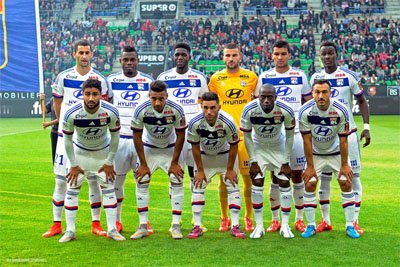
In 2012, Lyon celebrated their fifth Coupe de France title. Ever since then, they have not managed to add more silverware to their collection, but they remain in France’s elite, a status they will never lose, not after the way they dominated the national football scene for years, becoming a force to be reckoned with at international level as well. The fact that in January 2016 they got into their whole new and massively impressive stadium, Parc Olympique Lyonnais, gives them hope to return to where they got used to seeing themselves the first decade of this century.